Resources
Papers that include a comparison of StreetPave framework design results to AASHTO 93 and Pavement ME include:
- Li and Khazanovich, “Multi-gene genetic programming extension of AASHTO M-E for design of low-volume concrete pavements,” Journal of Road Engineering 2, 252–266, 2022.
- Rodden, Voigt, and Wathne, “Comparison of Roadway Jointed Plain Concrete Pavement Thickness Design Methods Common in the United States,” 12th International Symposium on Concrete Roads (ISCR), Prague, 2014.
Note that the following include thickness recommendations from StreetPave and pavementdesigner.org that are underpredicting the required thickness if fatigue cracking is controlling the design, which is probable at low levels of traffic.
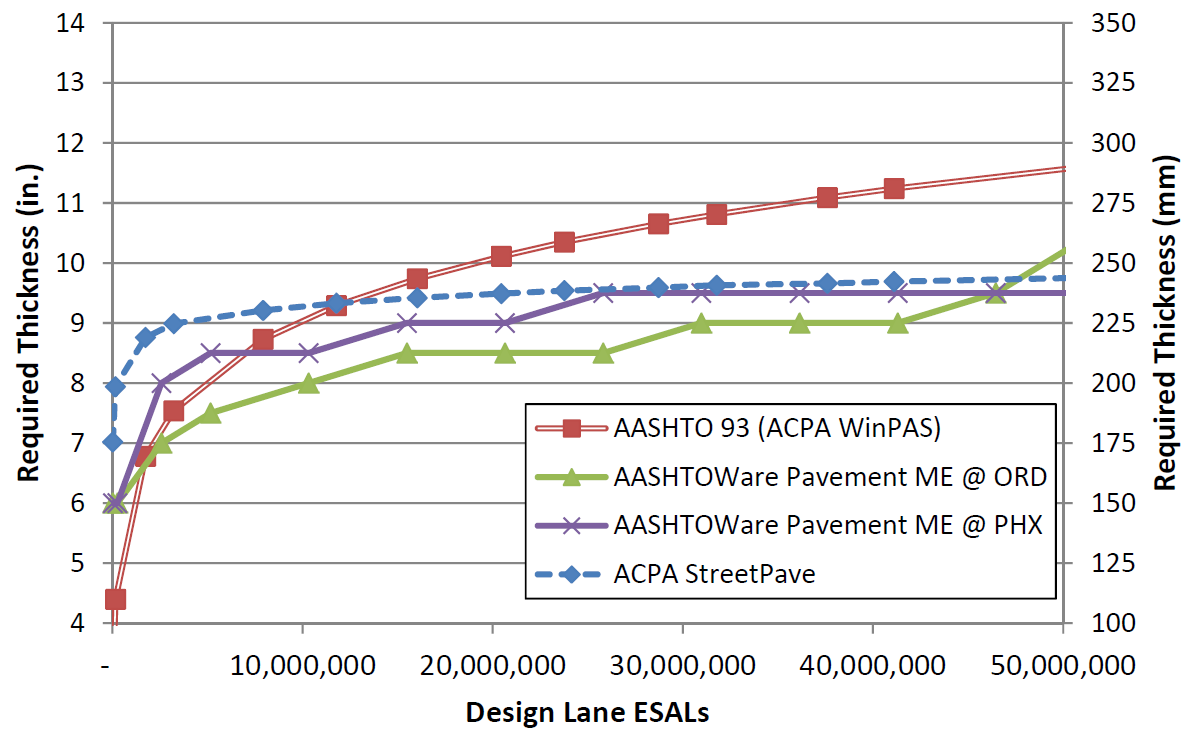
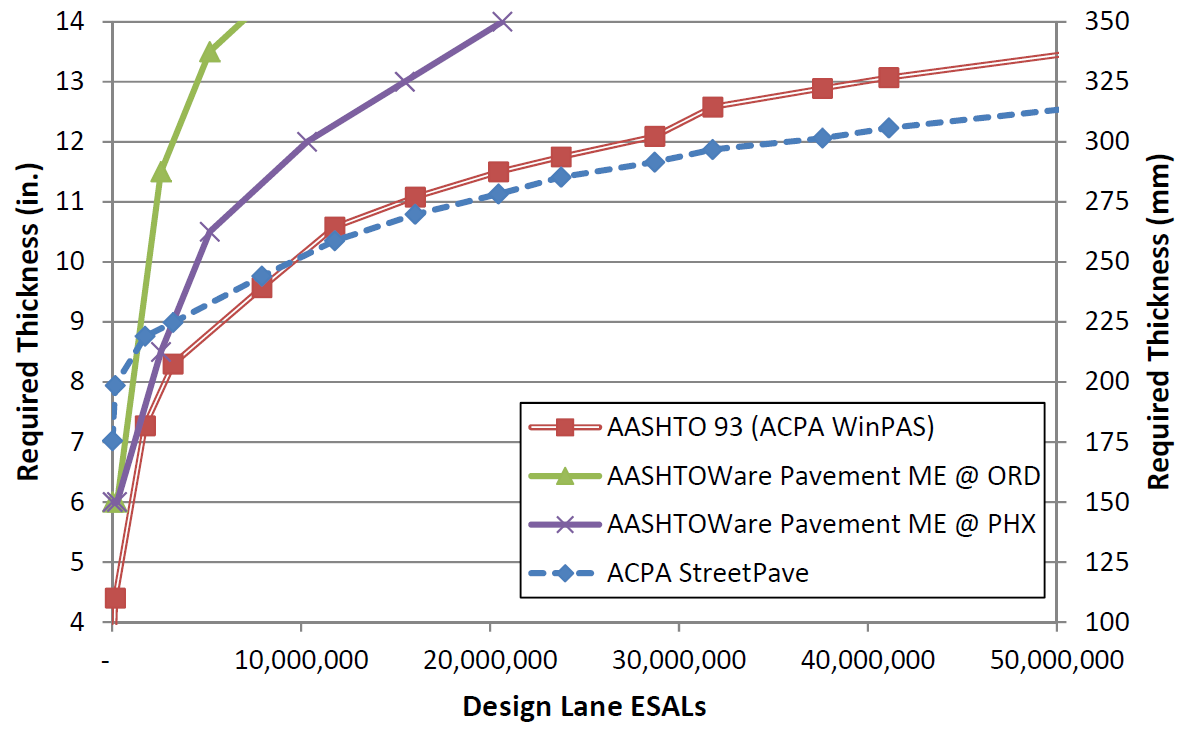
Rodden et al. 2014 found that for doweled JPCP the StreetPave framework provided similar, yet generally conservative results, to AASHTO Pavement ME. For undoweled JPCP, they documented that the StreetPave framework more closely matched AASHTO 93 and that AASHTO Pavement ME overpredicted the required thickness.
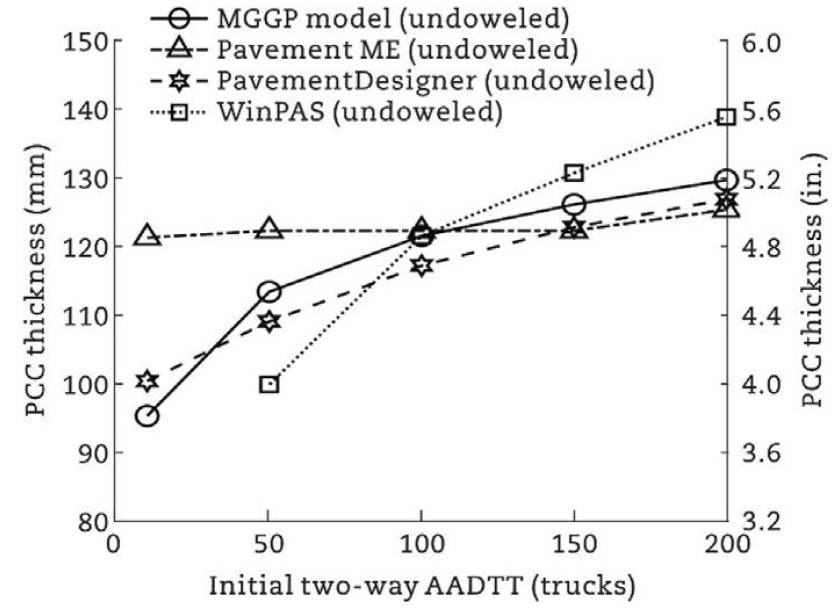
Li and Khazanovich 2022 trained the AASHTO Pavement ME models to increase accuracy for low-volume roads, shown as MGGP model below. Their results for undoweled JPCP show a much improved agreement with pavementdesigner.org than the original AASHTO Pavement ME.